


The Elephant of Light and Peace — Featured in The Shed Magazine
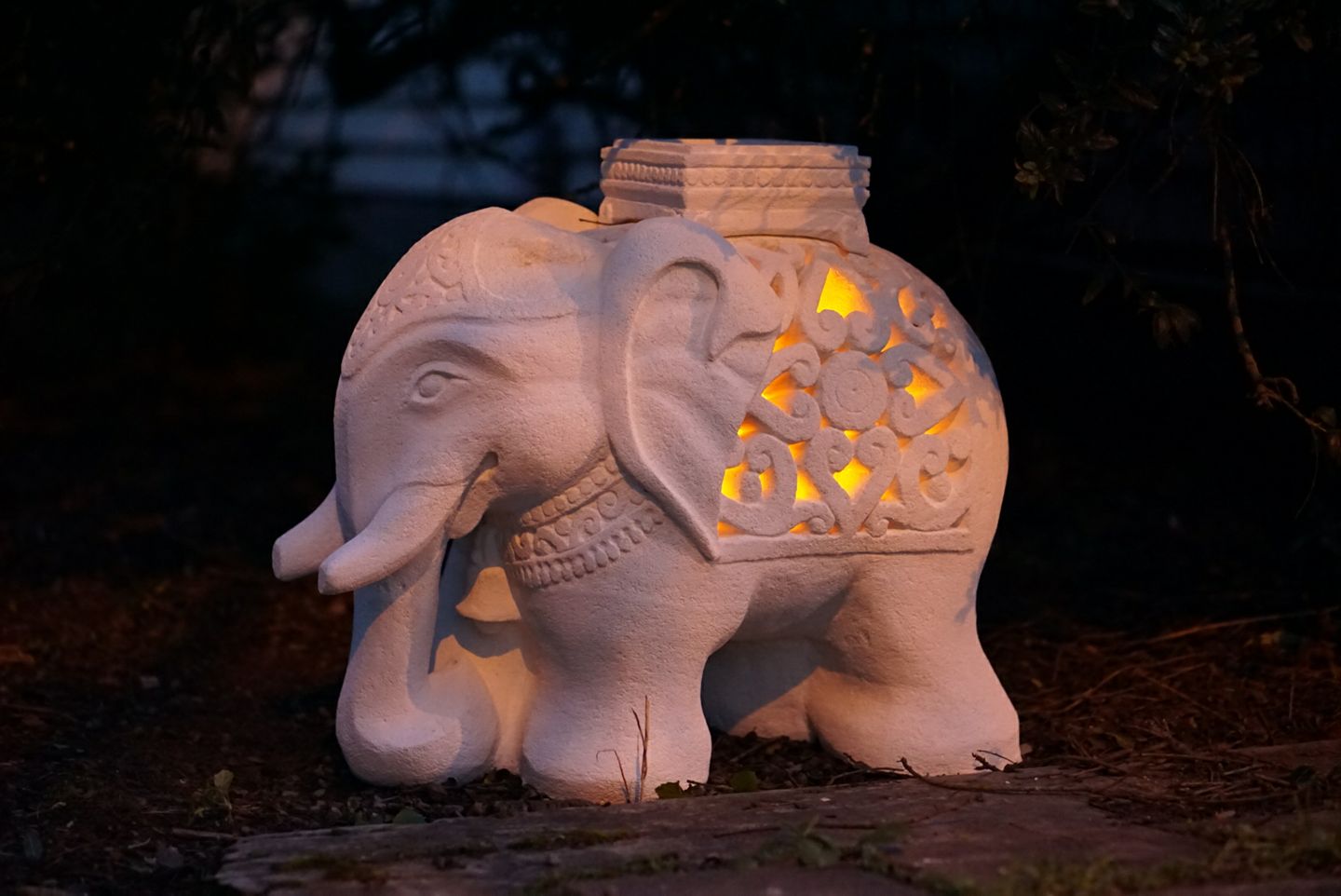
This is the Elephant of Light and Peace. It's carved from Oamaru stone, hollow through the body, with solar-powered candles sitting inside. At night, the light glows through the hand-carved lattice work on the flanks. The quote that stuck with me when it was finished: "Everyone thought I'd gone mad, but I was over the moon."
The piece was featured in a full article in The Shed magazine, November/December 2017, written by Sue Allison with photographs by Juliet Nicholas.
The Sculpture
The elephant is carved entirely from Oamaru limestone — the same soft, workable stone I use for all my sculpture work and teach in my workshops. What made this piece different was the hollow body. The stone needed to be kept at least 4cm thick throughout to hold its structural strength, while at the same time being light enough to lift. Everything inside had to be removed carefully, leaving the carved outer shell intact.
The decorative lattice work on the sides — the flowing koru-style scrollwork that lets the candlelight through — was done with fine riffler files and detail chisels. It's the kind of work where you're taking off very small amounts of stone at a time, checking constantly, because there's no going back. The face, the collar, the layered platform on top — all hand-carved using the same basic tools I'd recommend to any beginner: wood-working chisels, rasps, files and sandpaper.

The Shed magazine, November/December 2017 — "Carving Out A Career" by Sue Allison
Tools and Process
You don't need specialist stone chisels or masonry tools to carve Oamaru stone. Anything that works with wood works with limestone. I started larger sculptures on pallets to raise them to a comfortable working height, then moved to my adjustable Ryobi workbench once enough had been cut away to lift them. The bench holds up to 90kg, locks at 1.2m, and has drilled holes along the sides to hold hand tools — it's the single best piece of equipment I own.
For shaping, I used a coarse wood file and a Stanley Surform shaver to bring the bulk of the form together before moving to finer tools. The detail work — the carved collar, the face, the lattice panels — came later with riffler files. Rifflers are the tools that take you into the areas a flat file can't reach. Once you've used them, you wonder how you ever managed without them.
For finishing, wet-and-dry sandpaper in progressively finer grits brings Oamaru stone to a smooth, almost silky surface. A masonry sealer protects the finished piece outdoors.
Interested in commissioning a sculpture? Find out how commissions work →
Want to learn to carve yourself? Book a workshop → or join a night class →